Friday, April 3, 2009

On 309-318


In this final chapter, Covey shares what he believes to be an extremely important point in life: the key to growth and happiness is how we use the gap space between stimulus and response. It's important to realize how much control we do have on our situations, primarily how we perceive and react to worldly stimuli. Why are some people happier? Not always because their life is "better"; they are just better at dealing with it.


Covey says, "It's great for children to be able to identify themselves with the "tribe," to feel that many people know and care about them, even though they're spread all over the country." Three words: United States Army. When I was in my (incredibly long) decision process about whether I should contract, my aunt who is an Army colonel, told me no matter what base you're on, you'll always feel at home.


Anyway, Covey says we have to achieve unity. He ends the book with a sentence worth quoting on my final blog:

"By centering our lives on correct principles and creating a balanced focus between doing and increasing our ability to do, we become empowered in the task of creating effective, useful, and peaceful lives...for ourselves, and for our posterity."


Book=done

On 287-307


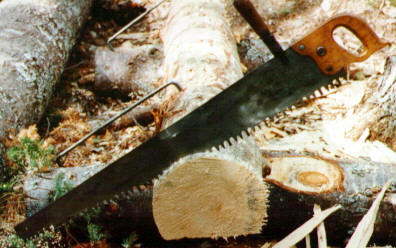
Incorporating time into our schedules for "renewal" activities (sharpening the saw) will not be easy. It's very Quadrant II-esque, and difficult at first to make time for it. But, I think when a person begins to see the benefits of living like that, it will become easier, because you will find yourself having more time.


This is why crafting a mission statement is important. When "renewing" yourself, it will be important to consult your mission, and make sure your life is congruent with your principles.


In this chapter, Covey points out how important a true focus on the self is. But he doesn't end without emphasizing the cruciality of "scripting others." This is especially important for ROTC and the Army, because we as MSIIIs, MSIVs, and officers will have a lot of influence over subordinates. Let's script them well.

Thursday, March 26, 2009

On 261-284

Synergy "catalyzes, unifies, and unleashes the greatest powers within people." In this chapter, Covey makes a strong link to the Win/Win chapter, and he focuses on the relationships between people that lead to such outcomes. He emphasizes risk. Covey claims that synergy is exciting, and that the best outcome is more likely to happen if the people involved take risk by being open--they have to really want a superior third alternative. This is directly tied to the "Levels of Communication" graph of trust against cooperation. Trust is necessary for good communication and truly positive results.

And, dichotomous thinking is usually a no-no. Covey talks about valuing the differences, and really listening to what another person has to say...trying to rid yourself of "there is the right opinion (mine), and there is the other opinion (his)" kind of thinking. There are lots of opinions, and a right/wrong line is not necessarily clearly drawn.

I am an exception to this. I'm always right. :) :) :) And now I'm off to fire at juniors and defend by bunker. Yay.

Thursday, March 19, 2009

On 235-260


"Communication is the most important skill in life" (Covey 237). This chapter emphasized empathy, which we have learned a lot about in MS classes. Soldiers that we lead will need an effective listener. It's a true challenge to try to understand someone--I mean you haven't grown up in his or her neighborhood, gotten yelled at by his or her parents, gone to his or her school, etc. It's probably not possible to completely understand someone, because you are not that person. But, just like a compromise is a lower form of the ideal "Win/Win," there is also a lower form of complete understanding. Use Covey's methods, and try.


Inserting your own autobiography is super-interesting to me. Just listen to people's conversations. Sometimes the person talking is barely done speaking, and the other person immediately relates it to his or her own life. That's fine for some conversations, but constantly thinking about something relates to you isn't even healthy. It's something a lot of people (including me) can improve.

On MS1 Paper


A few comments about the mission statement paper:


I found a quote by Theodore M. Hesburgh to sum up my paper: “The very essence of leadership is that you have to have vision. You can't blow an uncertain trumpet.”


I used the tools CPT Ambrose gave us, like the mind maps and value lists, and spent a lot of time crafting my personal mission statement. These tools were helpful, because I began to see connections with values I had identified as important and my role models. I admire people for their values. And, negatively, I look down upon those who do not have some values I define as very important. This is probably not good, but I learned it was true. For example, dependability and responsibility (getting things done on time and doing things you say you’ll do) are super-important to me. If I don’t admire you, it very well could be because you aren’t dependable or responsible.


So, my mission statement boils down to continuing my own dependability, with a high degree of realism, congruency, and practicality. Also guiding me will be want of competence and confidence, and incorporating fun, humor, and zeal in everyday activities.


The SMART goal I set is being as competent and confident as other MSIIs on the NDFTX. I then outlined actions I plan to take to reach this goal, such as attending OPORD classes given by MSIIIs and attending the CFTX to gain experience.

On 204-234


While the best model for a given situation is very dependent upon circumstances, Covey asserts that we should generally strive for Win/Win. Win/Wins are great. No one denies that; but I think, despite how Covey defends it, that the concept is idealistic. The world is too "mean" for people to act this "nice." Just the fact that he suggested looking to literature for a good example (because there aren't enough in real life!) makes me believe a world of win/wins isn't going to happen, no matter how great it would be.


That being said, Covey does redeem himself by mentioning compromise several times in the chapter. He says compromise is a lower form of win/win. So, if we strive for the limit (win/win), hopefully we'll at least reach a decent compromise. Remembering that going for what you both want is probably one of the best ways of getting what you want.

Friday, February 27, 2009

On 183-203


I want to point out the similarities in this chapter to the 7 Army Values.


We start in this chapter with the "Public Victory" portion of the book, and Covey uses the running metaphor of an Emotional Bank Account. You have to build up a reserve of trust with people. There are six major deposits. One is understanding the individual. I equate this with the Army Value of respect because Covey explains it by saying, "Treat them all the same by treating them differently." As MSG Wood loves to say, "treat people as they should be treated," is the Army definition of respect. Second, we can parallel Covey's showing personal integrity and keeping committments with the Army value of integrity. Keeping promises and true to your word is important. Third, we can see a similarity between Covey's apologizing sincerely when you make a withdrawal to the Army value of personal courage. Covey says it takes a great deal of character strength to apologize quickly...a great deal of courage. Fourth, I'm going to combine the Army values of duty and selfless service with Covey's attending to the little things. Putting a coat over his cold child shows both a duty as a father and selfless service. Fifth, I want to equate Covey's clarifying expectations with the Army value of leadership. Covey says "That's why it's so important whenever you come into a new situation to get all the expectations out on the table." I hope we all can see the similarity between this quote and being a new 2LT. And finally, the Army value of honor is upholding all the other values. And, Covey says that all six deposits are important.

Friday, February 20, 2009

On 146-182


"The key is not to priortize what's on your schedule, but to schedule your priorities."


To implement this, you have to figure out and define your priorites...which is where Habits 1 and 2 come in. Maybe you think you want to do better in math, but you always seem to be going to the mall with some new friends in lieu of working on math homework. So, you set a goal to do more math homework. But it doesn't happen. You wonder why you fail at your goal. Then you analyze yourself, and realize that fostering new relationships with people is more congruent with your values than doing well in a math class. It's important to decide what's important to you. Life's too short to feel guilty about what you should be doing. (I give this example very hypocritically.)


"It is the fourth human endowment--independent will--that really makes effective self-management possible."


It's good advice to work in Quadrant II. But you've got to want to do it. School is really important to me. Because of how important it is to me, I think I manage school work quite well. If I have an assignment due Wednesday, it is extremely rare that I'll still be working on it on Tuesday. It's more likely to be done by Sunday. This does two things: if Quadrant I stuff comes up, I have a cushion to still get the assignment done. And, if someone says on Tuesday night, "Want to go to _______?" I can say yes, because my work is done. It opens opportunities and decreases stress.


My word of advice to college students: move all your deadlines ahead.


Sunday, February 15, 2009

On 95-144


Covey talks a lot about our own "scripts." He suggests that we examine ourselves and see if our script matches our true values and principles. If not, we need to do some "rescripting." Our actions and habits needs to be congruent with our values.


Focus on guidance, power, wisdom, and security. Where is the source for these things in you? What are you centered on? I think I am centered on family, work (aka school), possession (reputation), and self. Not good--I need to be centered on principles. Do you have rough ideas for your personal mission statement? This will help identify your center, and aid you in becoming more congruent.


As a psych major and an athlete, I was especially interested in Covey's discussion on visualization. You can prepare for so many things--sports performances, interviews, spider encounters, delivering OPORDS, etc.--just by visualizing. Example: Before figure skating tests (both moves and freestyle), my coach would make me sit in the locker room with my head down and eyes closed. I would have to visualize every component of the routine I was about to do: the order, the placement on the ice, where I would be in the music, everything. This helps. I got to practice before ever stepping onto the ice.


p.s. I find it extremely creepy to visualize your own funeral.


Saturday, February 7, 2009

On 66-94


Instead of a long, wordy paragraph, I want to bring up 10 points and comments I had on this chapter.


1) It is important to understand that other people think differently. I know, it sounds cliche, but if we project our paradigms onto other people's actions, we're asking for misunderstandings. This kind of relates to empathy. (pg. 67)


2) There is a difference between freedom and liberty. How many luxuries do you turn into necessities? Do those "necessities" enslave you? How about your cell phone? Wouldn't it be kind of freeing if you didn't have to constantly check it and worry about people getting a hold of you? (pg. 69)


3) Proactivity=function of our decisions, not our conditions. It's choices, not feelings. You don't fall in love with someone, you choose to love him or her. (pg. 71&80)


4) "Use your R & I!" Oh my gosh, this made me cringe, and it made me greatly appreciate my parents. (pg. 75).


5) A lot of this chapter seemed annoyingly obvious. Covey acts like being proactive is such a novel concept; well, yeah, you're more likely to get what you want if you go for it. My nine-year-old brother could have told the MS1 and MS2 classes that. (pg. 76).


6) See the business scenario on page 77. By reading this, I learned that I have a reactive mindset. After Covey explains the situation, he says, "Now what would a reactive mind say to that? Oh come on. Face facts. You can only carry this positive thinking and self-psych approach so far. Sooner or later you have to face reality." This is exactly what I was thinking. That is bad.


7) On the circles of concern and influence--In my CSEM this semester, we read the Enchiridion by Epictetus. Epictetus says that true happiness comes from acting on those things you can control, and accepting peacefully those things you cannot. We even read the serenity prayer in class (pg. 86). I tend to worry about thing I cannot control, or things that are already in the past. That is bad.


8) See the comments on the story of Joseph in the Bible on page 89. 2LT Janke, who we all know (or at least have heard about) and love has a Arabic tattoo of this story. :)


9) There is a lot of similarity in this chapter to the Be. Know. Do. philosophy.


10) Keep your committments. I read the 4 Agreements over break, and one of the "agreements" Ruiz talks about is being impeccable with you word--meaning if you say something, mean it. Life is better for you and those you interact with. (pg. 92).

Friday, January 30, 2009

On 46-62


Effective habits are internalized principles and patterns of behavior. They are the intersection of knowledge, skills, and desire.


My favorite sentence in this chapter was "Happiness can be defined, in part at least, as the fruit of the desire and ability to sacrifice what we want now for what we want eventually" (48). This is so true. Let's say you find out you need to lose 20 lbs. to pass height/weight for the upcoming APFT. You really want to pass the APFT. Then, in the dining hall that night, you really want to eat a brownie with mint chocolate chip ice cream on top. What do you do? It's obvious that in order to be happy, you'll have to sacrifice what you want now (the mint-chocolately goodness) for what you want later (passing a PT test).


Covey talks a lot about the progression from dependency to independency to interdependency. This is good stuff. Our culture values independency so much...I think many people do not even realize that being interdependent is better. Covey says, "Ironically, you'll find that as you care less about what others think of you, you will care more about what others think of themselves and their worlds, including their relationship with you" (61). Awww, cute, we need to care about each other.


He also goes into detail with the P/PC Balance. In order to be effective humans, we need to balance actual production with production capability. You cannot just worry about results all the time--methods and preparation are important. (ps--In the long run, obviously, putting time in PC increases P anyway.)


Saturday, January 24, 2009

On 1-45

Hi peeps,
Here are my comments on the first 45 pages of The 7 Habits of Highly Effective People.

Covey makes a distinction between the Personality Ethic and the Character Ethic. In general, he says good character will lead to success and a "a good life," whereas a personality is often full of facades and falsities. For example, "your attitude determines your altitude." While I think this statement has true value, I also think it's important to point out the hundreds of people who have great, positive attitudes, but are still unsuccessful. Is it better to say, "Yes, I can do it!" and then fail, or say, "No, I probably can't do that," and then fail. A disconnect between what is actually happening and what you think is happening or want to happen will develop. I hate dishonesty, impracticality, and incongruency. Your attitude should match what you can do.

Covey states my point best on page 21: "If I try to use human influence strategies and tactics of how to get other people to do what I want, to work better, to be more motivated, to like me and each other--while my character is fundamentally flawed, marked by duplicity and insincerity--then in the long run, I cannot be successful."

(I would rather hear true criticism than false praise. False praise is one of my largest pet peeves. Do you agree?)

Then, Covey talks about paradigms. "Paradigm" is just a fancy word for "mental map" or "schema"--how you think about the world. We have assumptions in our heads, and our behavior comes from those. CPT Ambrose suggested that I read The Four Agreements last semester, so I did. This book talks all about changing agreements you have made with the world (aka assumptions), so that our actions can parallel the better ideas in our heads. You have to make changes from the roots, if you don't like an aspect of your life. Hacking away at the "leaves" does nothing.

Covey says, "Admission of ignorance is often the first step in our education" (37). This very Socratic statement makes me think of ROTC, MS1s in particular. I leave you with this: I believe that there are stupid questions. Sometimes, you should know something that is elementary or that we've been told millions of times, but you don't. However, would you rather look stupid by asking the question, or be stupid by continuing not to know?

Monday, January 19, 2009

There once was a cadet named Janke
Who was proud to be a Yankee
She went to MS1
And had a lot of fun
And now she is never cranky!